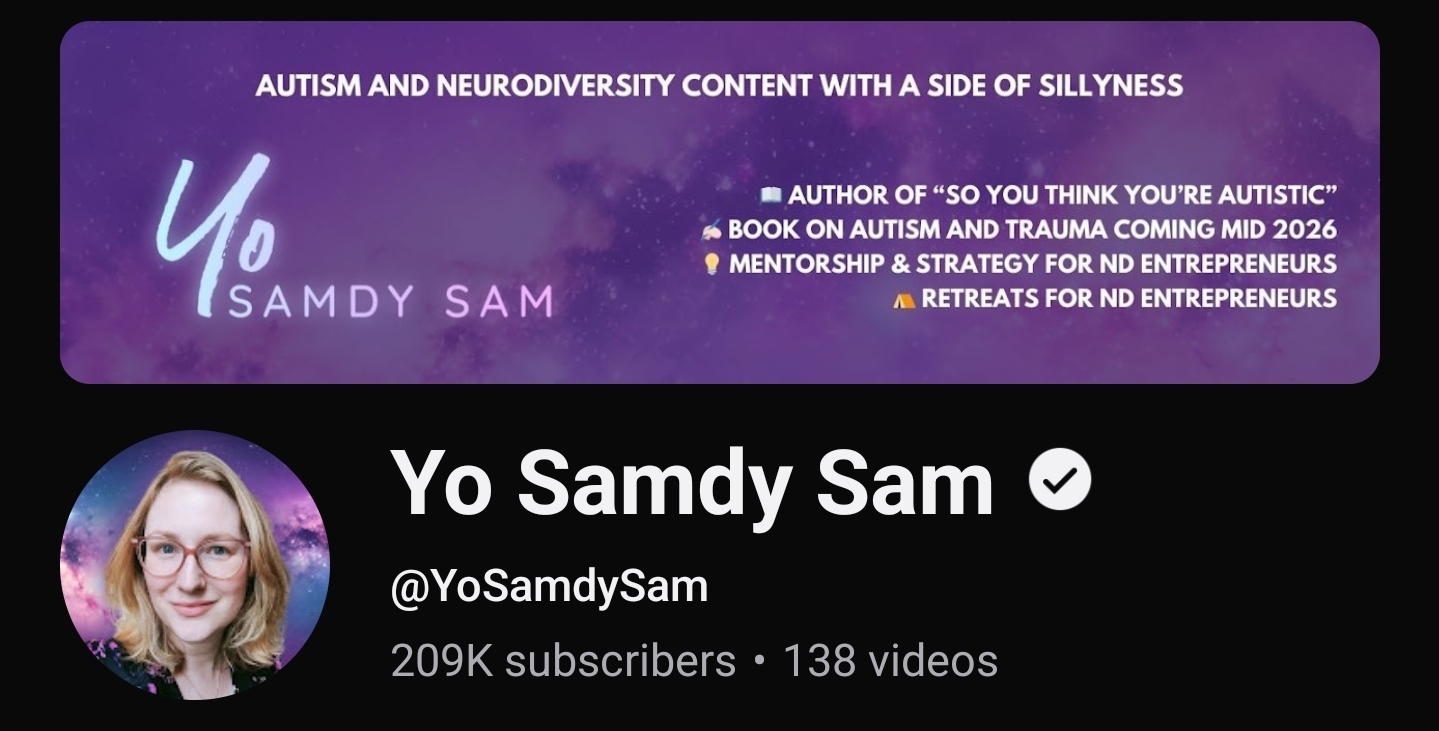
Yo Samdy Sam (YouTube channel)
Yo Samdy Sam is a YouTube channel featuring videos and podcasts that discuss autism, neurodiversity, and related lived-experience topics. Content includes interviews, personal reflections, diagnosis/assessment discussions, and playlists grouped by themes like diagnosis and autism in women/girls. Videos vary in length from short clips to hour-long conversations and many have captions.
Why this may help
A YouTube channel by Sam sharing long-form conversations and videos about autism and neurodiversity, aimed at adults exploring diagnosis, identity, and lived experience.
What to expect
Watchable playlists and episodes that blend personal storytelling, interviews with guests, and informational videos about diagnosis criteria, masking, alexithymia, and related topics. Mix of short and long-form video; captions are commonly available.
Good fit / maybe not
Best for
Adults exploring neurodivergent identity, people considering diagnosis, and those seeking peer perspectives on autism and related experiences.
Not ideal for
People needing clinical assessment, one-on-one therapy, or step-by-step treatment plans — this is primarily peer-created informational and conversational content.
Trust and evidence
Evidence not assessed. Content descriptions come from the channel listing; human verification is still needed to confirm details like available features and any external services.
Perspective: Community-created
Topics this touches
Accessibility
- Captions available
- Long-form
- Watch
Related resources
 Website
AASPIRE Healthcare Toolkit
Editorial pick
AASPIRE’s online toolkit offers information, worksheets, and a customizable healthcare accommodations report to help autistic adults prepare for and navigate primary care visits.
Why consider it: Autistic adults seeking tools to plan and communicate healthcare needs; providers wanting basic guidance on autism-inclusive primary care.
 Website
Reframing Autism (Autistic-led charity)
Editorial pick
An Autistic-led charity offering free resources, education, and training that promote affirming, neurodiversity-affirming views of autism and provide supports for autistic people, families, professionals, and allies.
Why consider it: People seeking affirming, neurodiversity‑framed information about autism and access to community‑led educational materials and training.