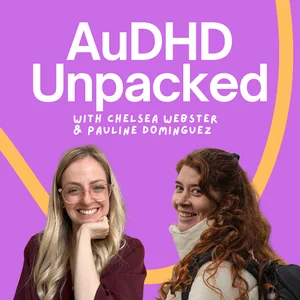
AuDHD Unpacked (podcast)
Hosts Chelsea Webster and Pauline Dominguez discuss lived experience of AuDHD (autistic + ADHD) across episodes covering sensory needs, executive function, burnout, identity, and practical coping strategies. Episodes are conversational, often vulnerable, and aim to validate listeners who are late‑diagnosed, self‑identified, or newly exploring neurodivergence. Episodes vary in length (roughly 45–80 minutes) and are published about twice a month.
Why this may help
A twice-monthly podcast exploring the overlap of autism and ADHD through personal conversations on masking, burnout, relationships, hyperfocus, body image, and daily life.
What to expect
Long-form audio episodes (often ~1 hour) featuring two hosts sharing personal stories and topical discussions; episodes touch on identity, sensory experience, relationships, work, burnout, and everyday strategies.
Good fit / maybe not
Best for
Adults 18+ seeking community-focused, lived-experience conversations about autism and ADHD overlaps and practical reflections on daily life.
Not ideal for
People looking for formal clinical guidance, diagnostic assessment, or evidence-based therapeutic protocols.
Trust and evidence
Evidence not assessed. Human verification is still needed; content is based on a public podcast listing and has not been independently reviewed for accuracy or claims.
Perspective: Community-created
Topics this touches
Accessibility
- Listen
- Long-form
Related resources
 Website
AASPIRE Healthcare Toolkit
Editorial pick
AASPIRE’s online toolkit offers information, worksheets, and a customizable healthcare accommodations report to help autistic adults prepare for and navigate primary care visits.
Why consider it: Autistic adults seeking tools to plan and communicate healthcare needs; providers wanting basic guidance on autism-inclusive primary care.
 Website
Reframing Autism (Autistic-led charity)
Editorial pick
An Autistic-led charity offering free resources, education, and training that promote affirming, neurodiversity-affirming views of autism and provide supports for autistic people, families, professionals, and allies.
Why consider it: People seeking affirming, neurodiversity‑framed information about autism and access to community‑led educational materials and training.